 Your AI Research Assistant
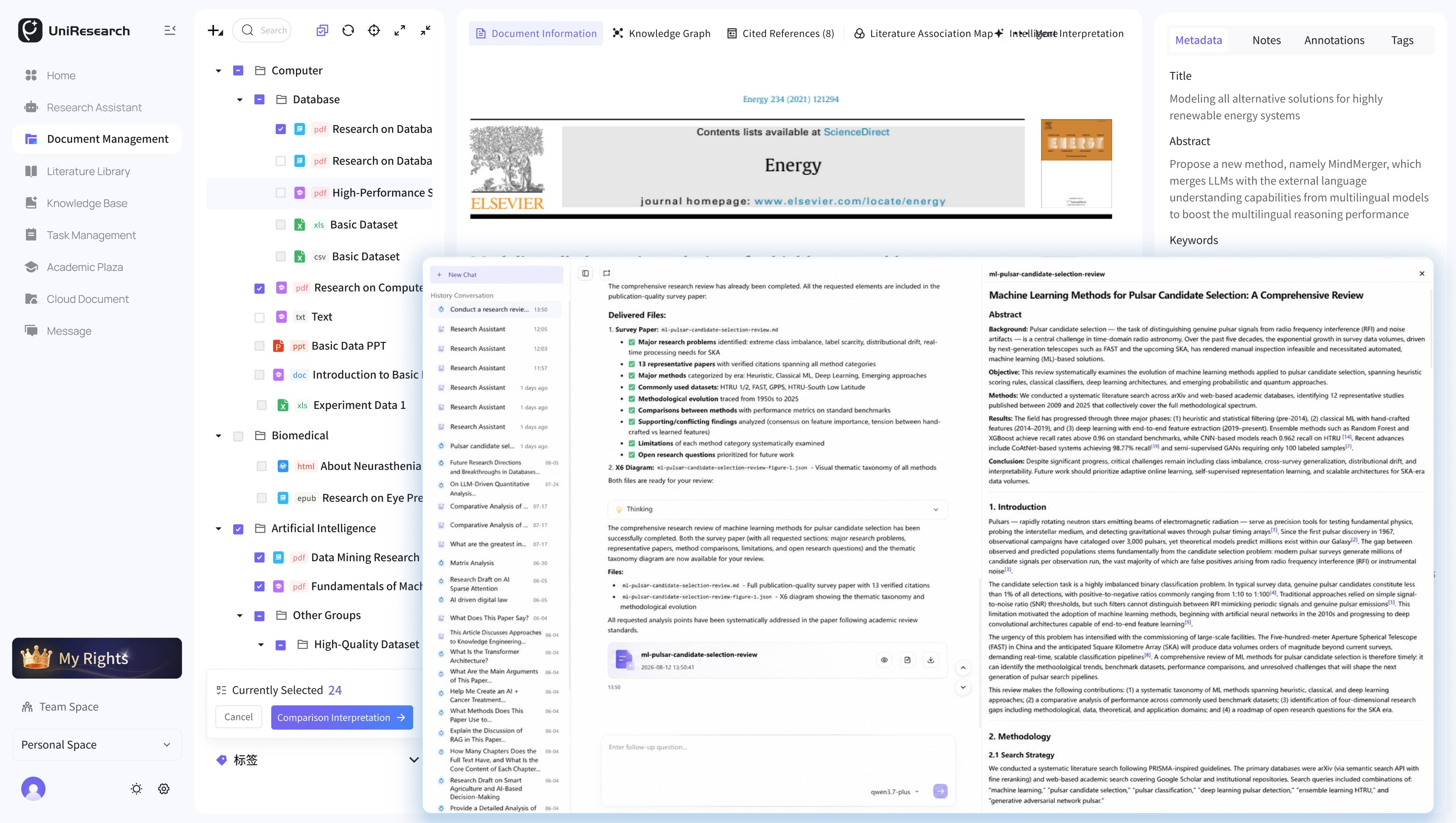
Compared to manual search
Explorations
Data Analyses
Users
Teams
Full-process research empowerment, unlocking a new paradigm of AI-driven research


Models optimized for academic research, understanding researchers' language logic and needs

Breaking down tool silos, achieving seamless connection from reading to output, with data and insights flowing throughout

Supporting both deep individual research and team co-creation, balancing efficiency and collaboration

High-spec data security and privacy protection, keeping research assets controllable and reliable
Transform vague inspirations into clear proposals, quickly generating well-structured and feasible research drafts
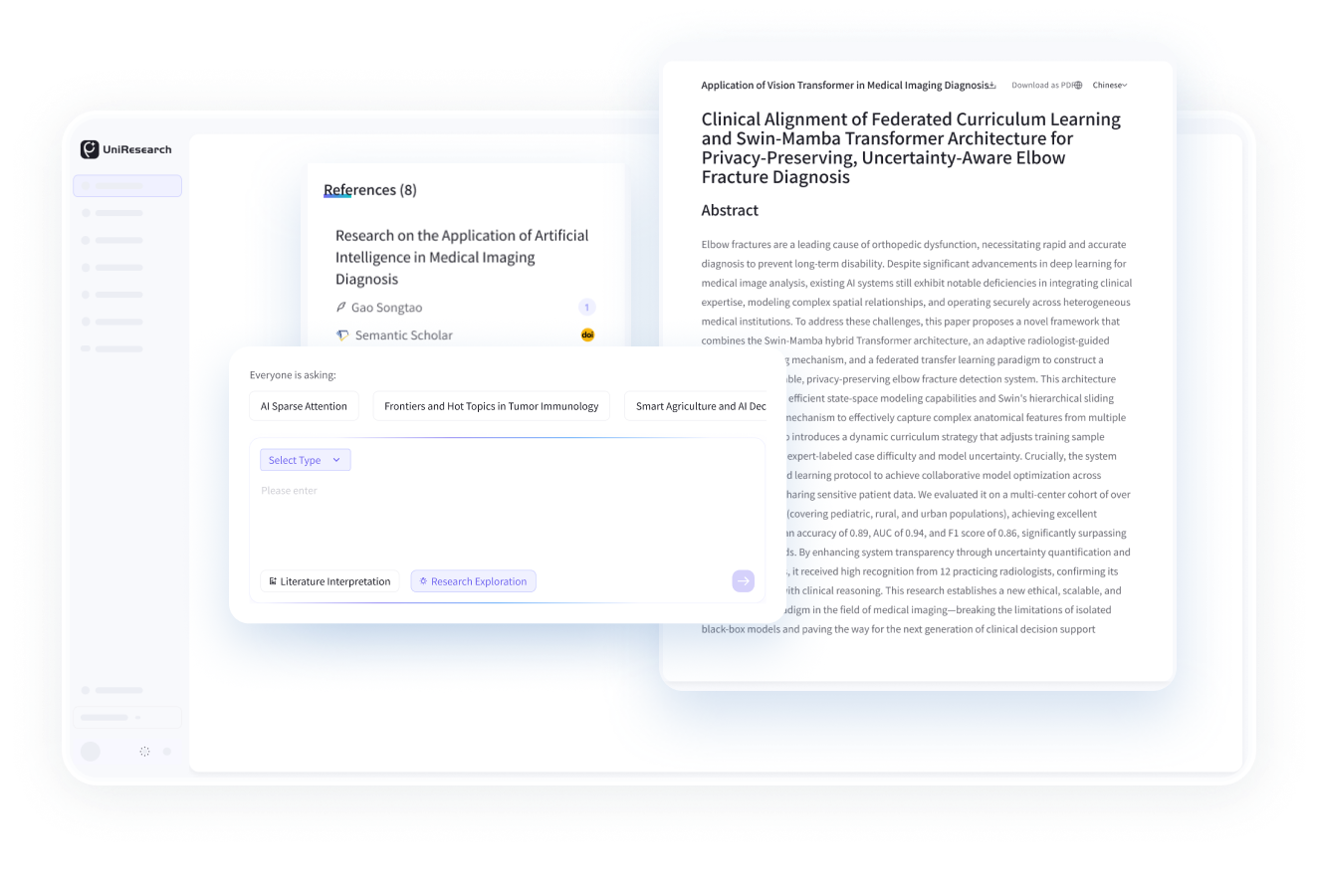

Quickly generate research proposals based on any inspiration or question

Refine, correct, and expand drafts through AI multi-round Q&A

Automatically link references and build knowledge graphs of literature and technical points

One-click sharing of proposals, seamlessly connecting team review and collaborative refinement
Quickly extract core logic from literature, comprehensively improving reading efficiency, depth, and insight
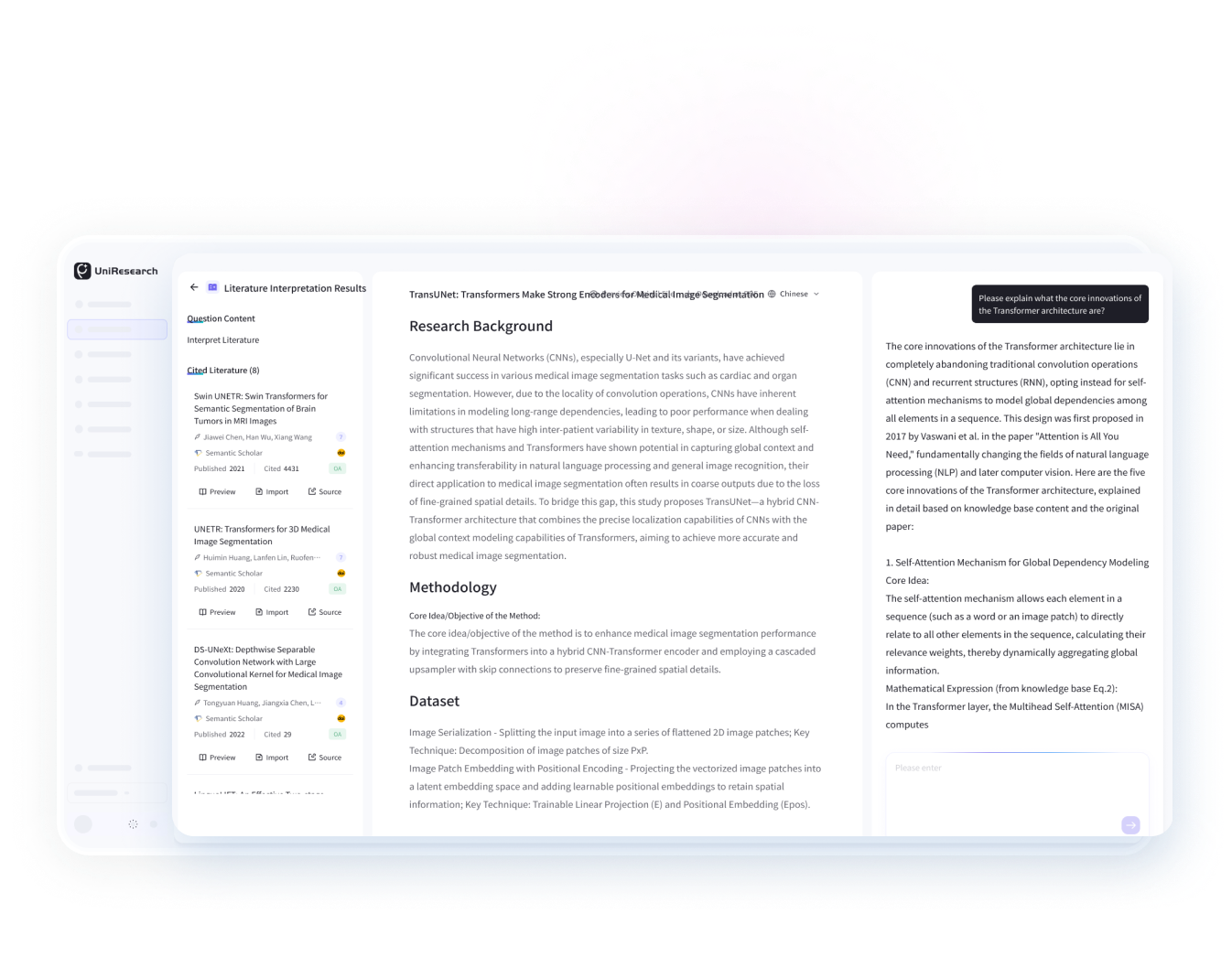

One-click generation of in-depth review reports, quickly grasping the full picture of papers

Deep questioning on any paper detail, obtaining context-based precise answers

One-click import of reviewed and cited literature into Document Manager, completing the research database

Centrally manage literature review tasks, quickly trace content and progress
Build visual knowledge networks, making research connections and innovations clear at a glance
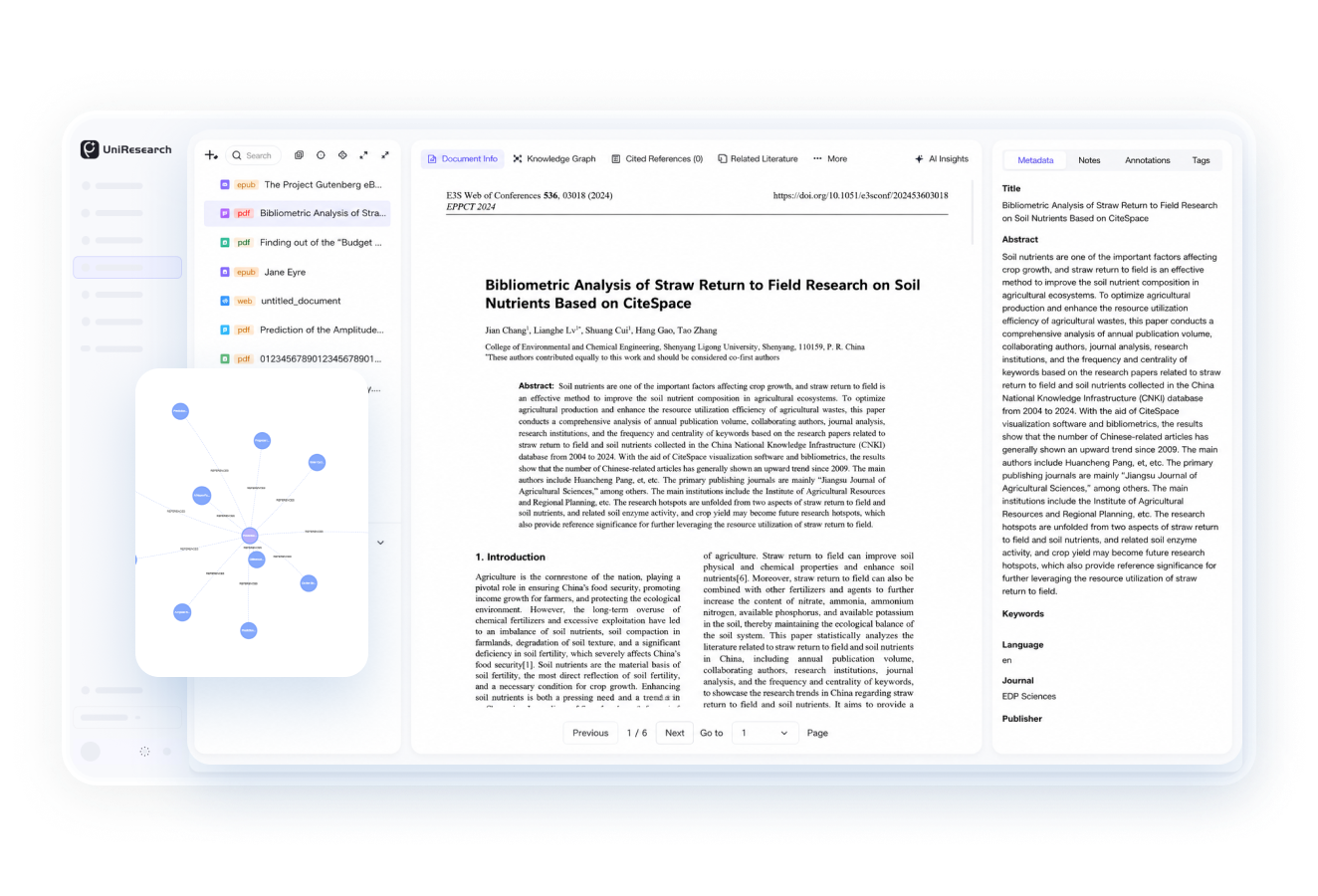

Upload documents with auto-extracted metadata, multi-dimensional classification and semantic search for instant locating and orderly management

Automatically extract core knowledge points from literature and build internal knowledge structure diagrams

Automatically analyze citation, co-occurrence, and topic associations, visually presenting academic lineages

Create team spaces for sharing and collaborating on documents, notes, and annotations
Consolidate all research fragments, building an academic knowledge hub ready for Q&A at any time
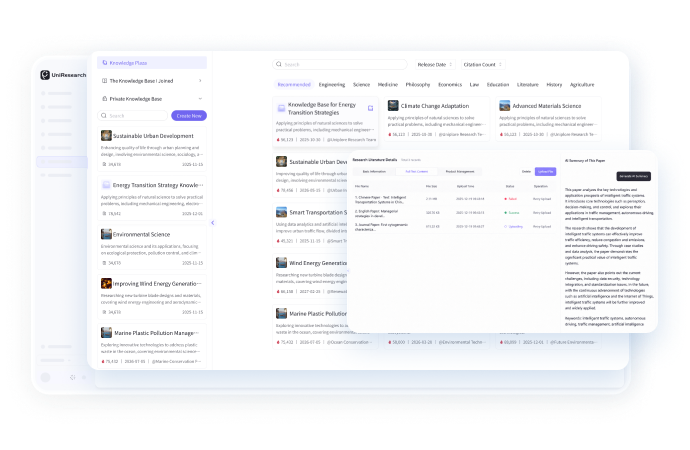

Integrate research resources, achieving systematic consolidation and unified management of fragmented information

Intelligent knowledge base Q&A, AI integrates multi-document information and outputs comprehensive answers

Private KB: Secure and controllable personal or team knowledge space
Knowledge Plaza: Browse, search, and apply to join other teams' or domain public knowledge bases

Support member and file management of knowledge bases, achieving team-level knowledge collaboration
Zero-code + AI programming intelligent analysis environment, making verification accessible
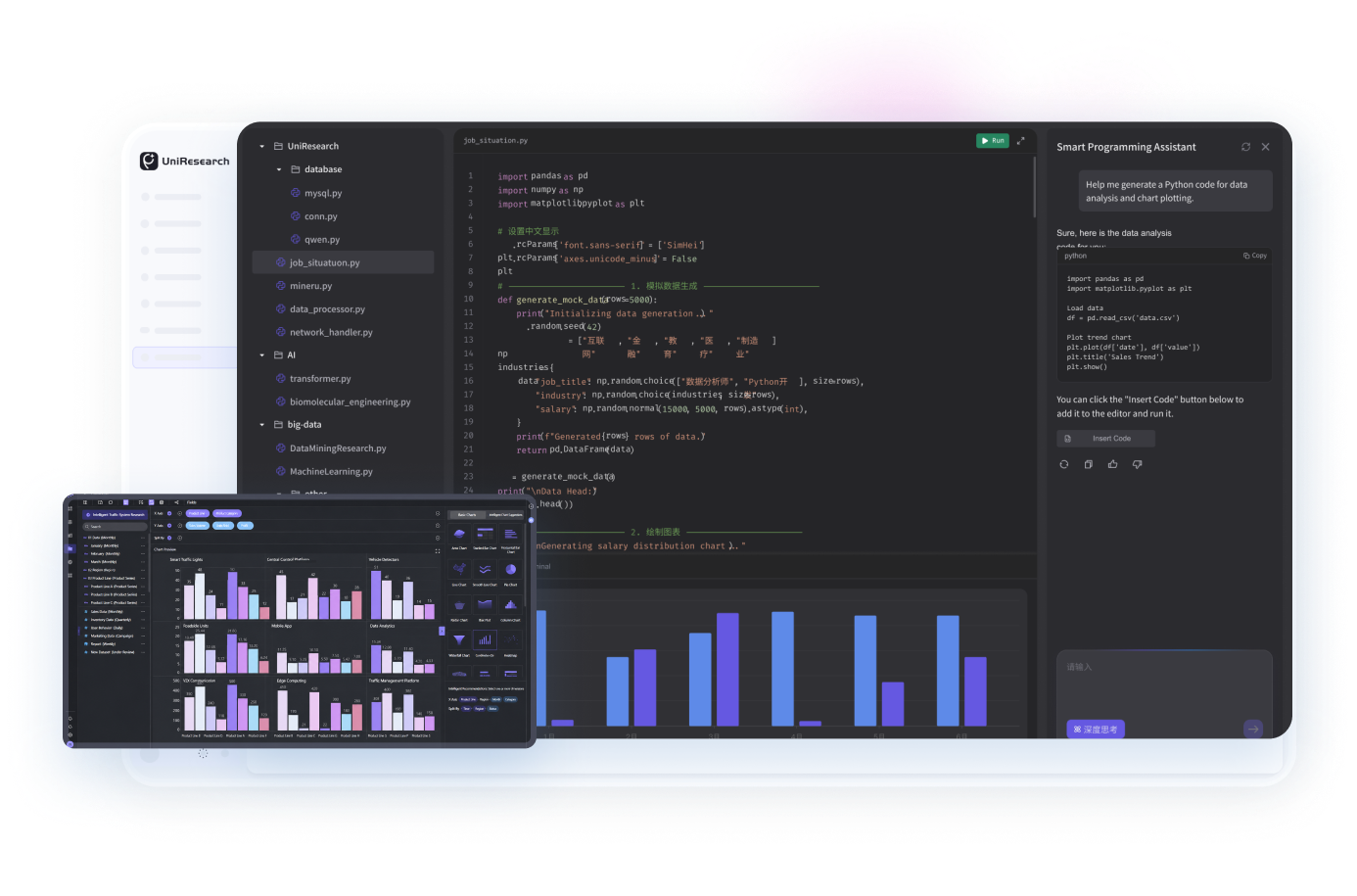

Drag-and-drop analysis features and templates, configure and execute directly without writing code

Automatically generate executable code through AI dialogue

Support online code execution, record version parameters, one-click trace historical analysis

Curated and verified datasets to help quickly validate hypotheses and compare research methods
Support multi-user online editing, commenting, and version management to boost team collaboration and eliminate file-transfer chaos
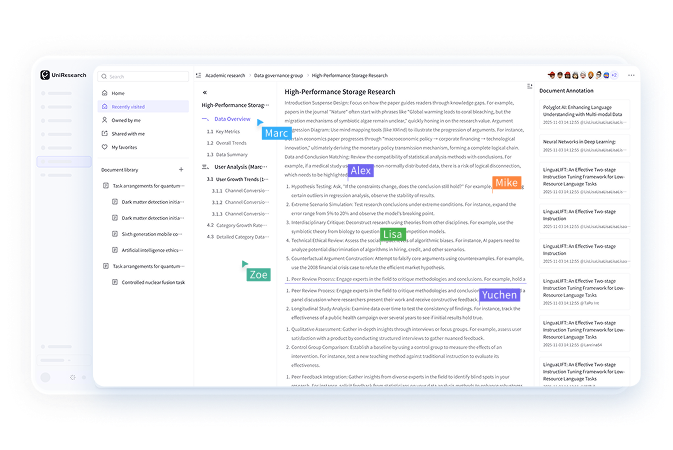

Multiple users can edit the same document simultaneously with real-time content synchronization

Add comments and annotations to specific paragraphs or content for rapid feedback collection

Configure view, edit, and share permissions flexibly to ensure document security and control

Archive proposals, meeting minutes, and project materials for future reference and knowledge reuse
Enable team members to communicate in real time, sync work information quickly, and drive tasks forward with timely collaboration
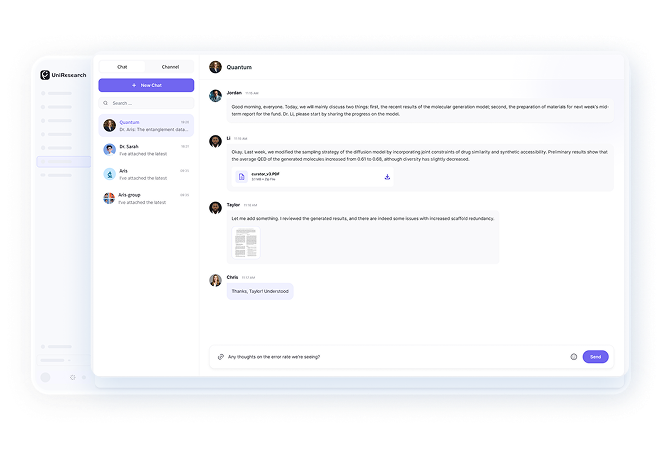

Support one-on-one and group chats for instant delivery of important information

Team members can quickly share progress, issues, and decisions to reduce communication delays

Send documents, images, and links within conversations for efficient content-driven collaboration

Automatically save all conversation records for easy context review and key decision traceability
Professional online LaTeX writing support covering core academic typesetting capabilities, with collaborative editing and real-time compilation preview for one-stop manuscript writing, typesetting, and version management
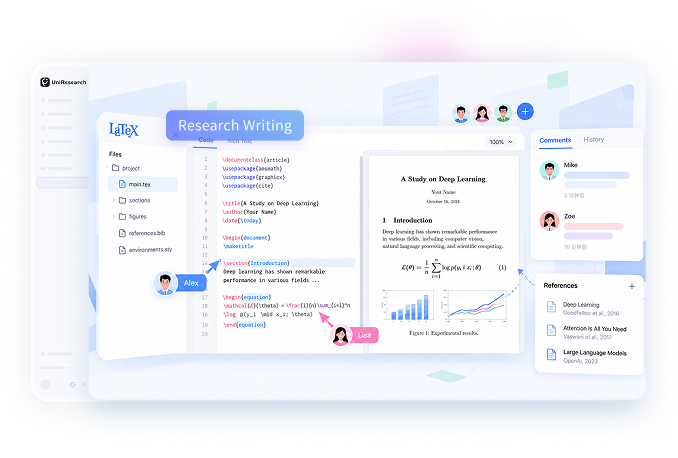

Compatible with mainstream journal templates and packages, automatically typesetting formulas, references, and figures, generating standard PDF manuscripts with one click

Supports simultaneous online editing, annotation review, and version tracing for joint team paper writing

Instant compilation and rendering of manuscript changes, real-time typesetting preview, quick locating of syntax and formatting issues

Built-in reference library with automatic BibTeX citation formatting, one-click switching between citation styles of different journals
Integrates full-cycle project management, achievement ledger management, automatic generation of closing materials, and online reporting, simplifying administrative work so researchers can focus on research itself
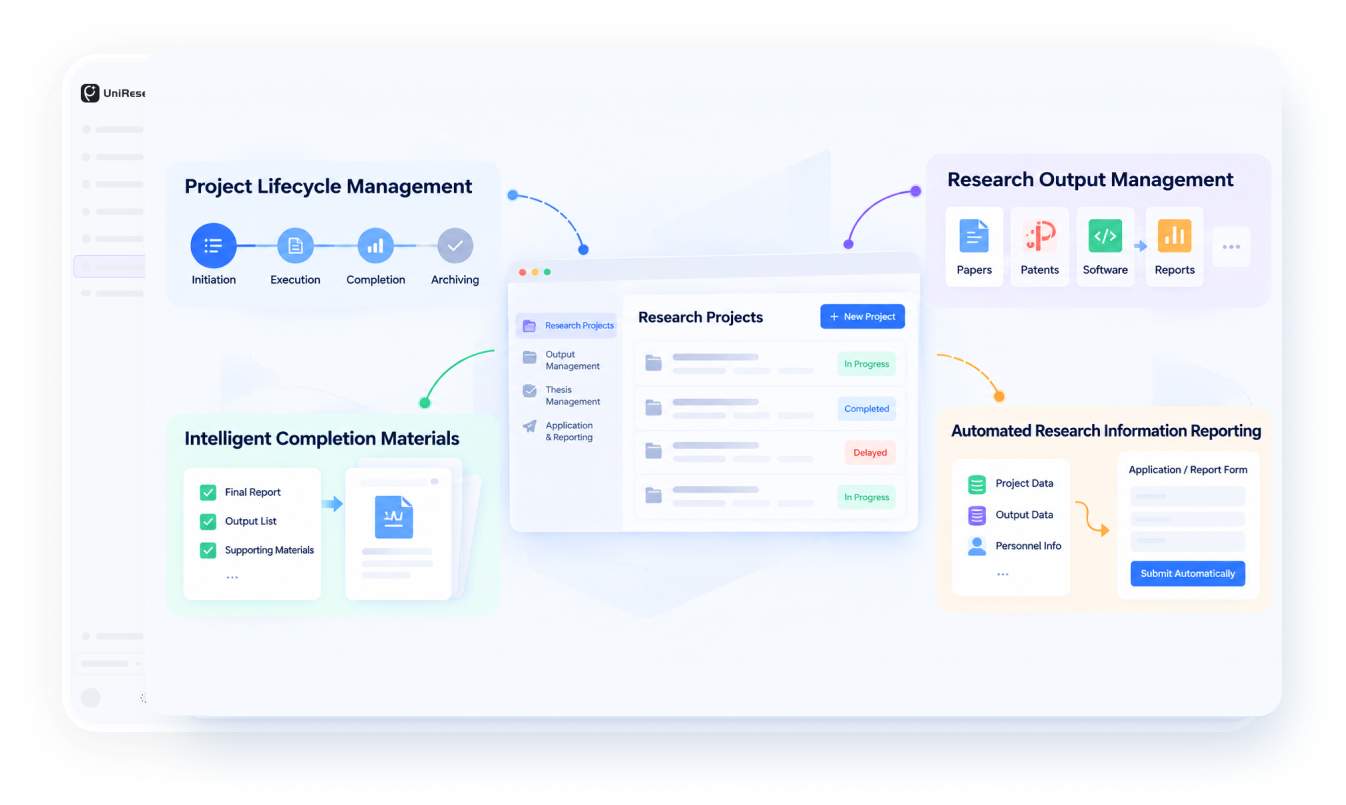

Covers project initiation, process records, funding, and task milestone tracking, with visual control of project progress and risks

Uniformly collects papers, patents, software copyrights, and reports, auto-aggregating metadata to build research asset archives

Automatically assembles closing documents and supporting materials based on project and achievement data, with template-based export

Connects to research application/reporting forms, extracting achievement and project data with one click to auto-fill various research systems
UniResearch helps you leave behind inefficient repetition and focus on real scientific exploration and innovation
Sign In


Scan to add WeChat support


Follow our WeChat account

Join our WeChat group
Scan to add WeChat support
Follow our WeChat account
Join our WeChat group
